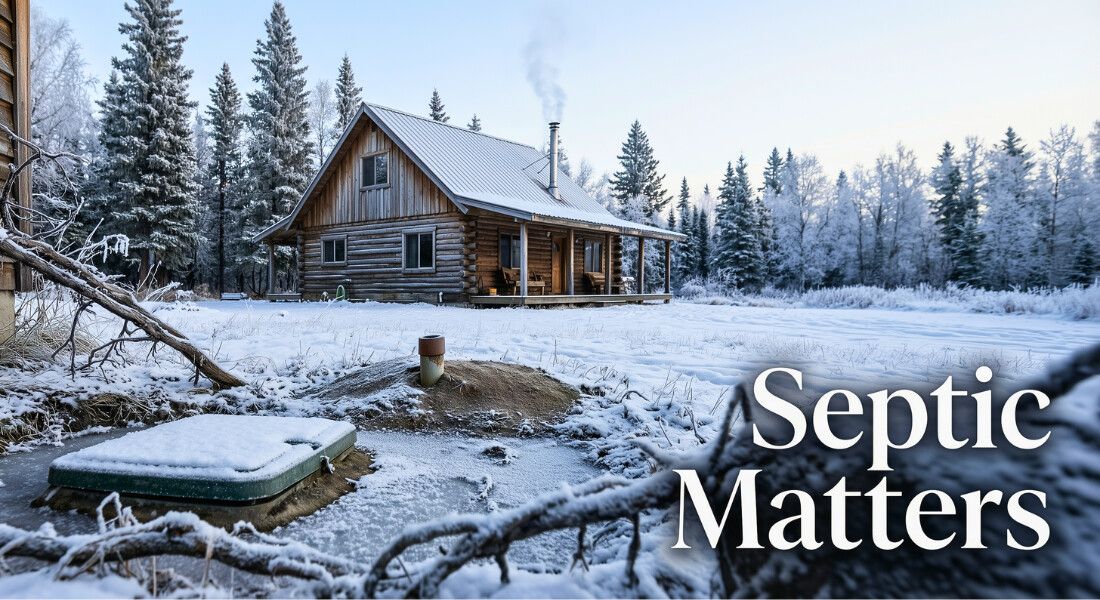
There’s a lot that can surprise homebuyers who are new to the Alaska market. One thing that catches many off guard is how a septic system can make or break an Alaska home purchase.
I’ve lived here my whole life. I’ve watched buyers fall in love with land, views, and cabins, only to get blindsided by septic issues after closing. It isn’t dramatic or flashy, but it is one of the most expensive surprises a homeowner can inherit in Alaska.
Let’s slow this down and look at what’s actually going on.
Why Septic Systems Matter More in Alaska
In much of the Lower 48, public sewer systems handle wastewater without much thought. If you’re buying a home in Alaska, especially outside city centers like Palmer and Wasilla, septic systems are the norm. That puts long-term responsibility squarely on the homeowner.
Replacing a septic system here is rarely a simple project. Soil composition, frost depth, access, engineering requirements, and short construction seasons all drive costs higher. Depending on the property, replacement can easily reach tens of thousands of dollars. And once a system fails, postponing the work usually isn’t an option.
That means the septic system deserves the same attention as a roof or foundation. It is essential infrastructure, not a background detail.
Freezing Isn’t Usually What Causes Failure
There’s a common belief that septic systems fail in Alaska because they freeze. While that can happen, it’s relatively uncommon and usually tied to neglect or unusual circumstances.
Most failures happen for a quieter reason. Tanks that aren’t regularly pumped allow solids to accumulate. Once a tank fills beyond capacity, those solids move into the leach field. When the field clogs, the soil can no longer absorb wastewater, and replacement becomes the only real option.
In colder ground conditions like ours, you should generally have the tank pumped every couple of years. That schedule matters more here than it does in warmer states, where biological breakdown happens faster.
In practice, maintenance history often tells you more than the system’s age.
Steel Tanks Are a Hidden Risk in Older Homes
Many older Alaska homes were built with steel septic tanks, which typically last 20 to 30 years. Once corrosion begins, deterioration accelerates quickly. Lids can fail, sidewalls can thin, and structural integrity can become questionable.
Water softeners can make things worse by introducing salt that speeds corrosion. I’ve seen tanks that looked fine on paper but were already compromised underground.
If you’re considering an older home in the Mat-Su Valley, the age and material of the septic tank shouldn’t be an afterthought. A system that works today can still represent a near-term replacement risk.
Seller Disclosures Matter, But Buyers Still Need to Dig
Alaska requires sellers to complete a detailed disclosure form. It’s extensive, and sellers are expected to disclose what they know or can reasonably discover.
That framework helps, but it doesn’t replace buyer diligence. Sellers may not have owned the property long. Records can be incomplete. Pumping history gets lost. Older systems may predate current standards.
Buyers should ask clear, direct questions:
- How old is the system?
- When was it last pumped?
- What material is the tank?
- Has there been any past failure or repair?
These questions don’t derail transactions. Unexpected discoveries do.
A Situation Many Buyers Never Hear About
A few winters ago, I worked with a couple relocating from the Lower 48. They found a quiet property outside Wasilla with privacy, trees, and room to breathe. The home showed well, the price made sense, and they were ready to move quickly.
The septic system appeared to function, but there were no pumping records. It still had the original steel tank from the early 1990s.
Instead of rushing forward, we had the tank pumped and inspected. Corrosion had already compromised the baffles, and the walls were thinning. It hadn’t failed yet, but it was headed that way.
Because it was caught early, the buyers negotiated replacement before closing. They moved in knowing the system would serve them for decades, not months.
That’s where experience matters. Alaska doesn’t punish optimism. It punishes assumptions.
Why Septic Issues Get Overlooked Until the End
There’s a human side to this. Buyers get emotionally invested early. They picture winters by the fire, summers outdoors, and the space they didn’t have before. Septic systems don’t fit that vision, so they tend to get mentally pushed aside.
That’s understandable, but Alaska has a way of enforcing reality later. The buyers who fare best take a little extra time to verify the unglamorous systems first. Once the septic is confirmed solid, the rest of the purchase feels far less stressful.
Location Within the Mat-Su Valley Matters
Soil conditions vary widely across Palmer, Wasilla, Big Lake, and the surrounding areas. A system that works well on one lot may struggle on another.
High water tables, silty soils, and seasonal saturation all affect performance. A system approved years ago may not meet current standards if replacement becomes necessary. Layout, reserve areas, and site constraints all factor into future options.
Understanding these variables early can prevent expensive surprises later.
Questions Buyers Commonly Ask About Septic Systems
How often should a septic tank be pumped in Alaska?
Most systems should be pumped every two to three years. Larger households or heavier use may require more frequent service.
Can replacement really cost tens of thousands of dollars?
Yes. Engineering, excavation, materials, and site constraints add up quickly, especially in rural areas.
Are steel tanks always a deal-breaker?
Not always, but they do carry a higher risk, particularly if they are near or beyond their expected lifespan.
Will a standard inspection catch septic problems?
Inspections help, but pumping and internal inspection provide much clearer insight.
What happens if a system fails after closing?
Responsibility usually falls entirely on the homeowner unless terms were negotiated beforehand.
Is septic maintenance different here than in warmer states?
Yes. Colder soils slow biological breakdown, making regular pumping more important.
A Practical Way to Think About Septic Risk
Alaska offers incredible beauty, but it leaves little room for overlooked systems. Most issues are predictable, preventable, and costly only when ignored.
Buyers in Alaska benefit from gaining a clear understanding of a property before committing to a purchase. Contact us if you want a practical, local perspective on risks that don’t always show up in listings or inspections.