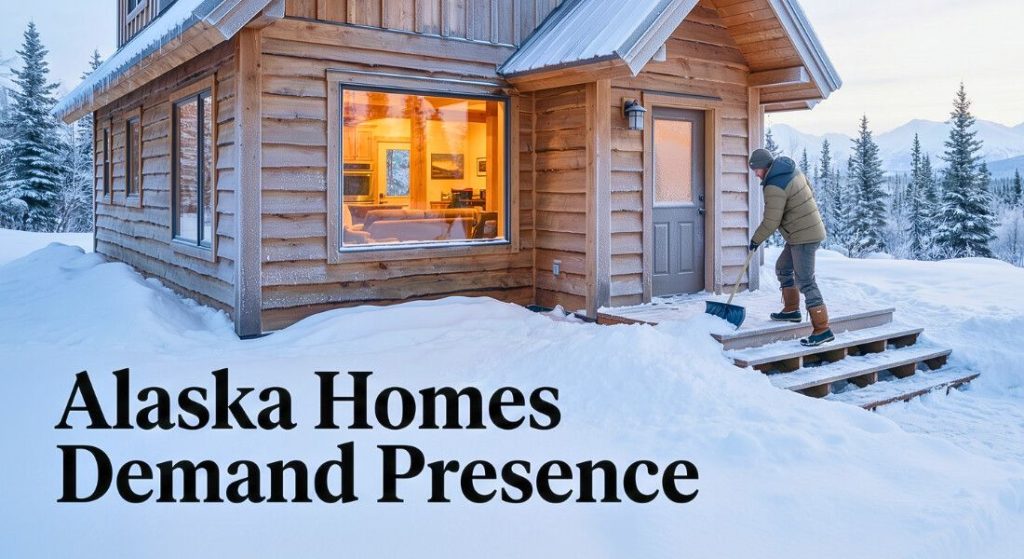

People move north, imagining space. They picture mountains, trees, and long stretches of quiet. I’ve watched that dream bring people to the Valley for decades. And while the idea of endless land is real, it isn’t as wide open as you may think.
I’ve watched newcomers try to make sense of a place that looks wide open but works very differently. If you’re thinking about a move, here is the part many miss: Alaska has land, but privately held, accessible, buildable acreage is limited.
Once you understand that, the search becomes a lot more productive.
The Map Creates a False Impression
On a map, Alaska looks untouched. People in the Lower 48 see that we have more square miles than Texas, California, and Montana combined. They assume acreage must be abundant and inexpensive. But most of that land is already spoken for.
The federal government owns over sixty percent of the land in Alaska. A huge portion belongs to the State of Alaska. Native corporations hold another significant share. Military bases, refuge lands, and protected areas take up still more.
Once you account for all that, the amount of private land left over is roughly the size of Massachusetts. That comparison surprises almost every relocation buyer. It also explains a lot about prices, competition, and why large private parcels are rare.
A Story That Illustrates the Reality
Last year, a couple from the Lower 48 came up looking for ten to twenty acres with mountain views, privacy, and a good well site. They weren’t asking for anything unusual.
We pulled up every parcel for sale in the Valley, and about ninety percent of the options were an acre or less. Not because sellers are holding back. It’s because truly private, usable land is limited.
The few larger parcels that did exist came with challenges. There were wetlands, steep terrain, poor soils, no legal access, and utilities far away. Those are expensive hurdles in Alaska.
The couple reacted as most people do. They were surprised, then curious, then more grounded in what was realistic.
A few weeks later, they settled on a quiet acre and a half that gave them what they were looking for without putting them miles from town.
Acreage is possible. It just doesn’t look like the fantasy many picture before arriving.
Why Usable Land Is Hard to Find in the Valley
Even in the Mat-Su, where opportunities are strong, several factors limit what you can actually build on.
1. Topography
The hillsides that look beautiful from the Glenn Highway can be too steep, rocky, or uneven for a normal build. Flattening the ground here is not a small job. It often requires excavation, drainage work, and careful engineering.
A site visit always tells a clearer story than a listing photo.
2. Wetlands and Soils
Much of our postcard scenery is muskeg or low-lying ground. Septic systems may not pass testing in those areas. Wells can be deeper and more expensive. Snow load in winter and runoff in spring create additional strain.
A good septic site is more valuable than a wide stretch of soggy ground.
3. Access
A property may appear open and accessible, but legal access is not guaranteed. Some land has no road, no easement, and no promise of winter plowing. Fixing access often requires new construction or negotiations with surrounding owners.
If you cannot reach it reliably in January, it is not truly usable.
4. Distance to Utilities
Power is the hidden cost that catches newcomers off guard. The nearest pole might be a half mile away. Extending lines can cost tens of thousands before you even begin building.
Always ask how close the power source is before you fall in love with the view.
5. Ownership Blocks
Federal agencies, the State, or Native corporations own large tracts of land. These lands are important, but they rarely reach the open market.
A wide-open landscape does not automatically mean available land.
What Buyers Picture vs. What They Usually Need
Most relocation buyers think they need twenty acres to feel private. In reality, a single wooded acre in the Valley can feel quiet and sheltered. Dense tree lines, distance from main roads, and thoughtful home placement often create the privacy people want without requiring massive parcels.
How to Approach a Land Search More Effectively
When I work with people new to the Valley, I usually recommend a few early steps.
- Start with year-round access. If the property is difficult in winter, everything else becomes secondary.
- Check soils early. A passing septic test saves you time and money.
- Ask about utilities. Distance to power is one of the biggest cost shocks for relocation buyers.
- Stay open-minded about smaller parcels. A single wooded acre here feels more private than five open acres in many states.
- Consider a range of locations. Areas around Palmer, Wasilla, and the pockets in between offer unique advantages.
A flexible approach usually leads to better outcomes and fewer surprises.
A Winter Walk That Explained It All
Several years ago, I walked a parcel in February with a buyer from Oregon. The snow was drifted waist-high, and the entire property looked peaceful under a blue winter sky. On the map, it seemed perfect: ten acres, mountain views, close to town.
But as soon as we stepped off the plowed road, our boots sank deep. Under the snow, the ground was saturated muskeg. Spruce trees leaned in opposite directions, a clear sign of unstable soil. Up here, trees tell you more than brochures ever will.
We tried to reach the far side of the parcel, but the ground shifted with almost every step. I watched the buyer process what he was seeing. It wasn’t disappointment; it was clarity. After a long, quiet moment, he said, “Now I get why big land is tricky.”
A week later, he bought a smaller, drier lot. Five years later, he still sends photos of his cabin lights glowing through the trees in winter.
The Big Picture About Acreage in Alaska
Alaska is full of beauty and open space, but not full of privately available acreage. Much of the land is controlled, protected, or simply not for sale. The available land exists in smaller pockets, which is part of what gives the Valley its character.
When expectations align with how Alaska really works, buyers make confident decisions and avoid costly surprises. It doesn’t take fifty acres to enjoy a quiet life here. It just takes the right piece of ground.
Common Questions Buyers Ask About Alaska Acreage
How big does a parcel need to be to feel private in the Valley?
For most people, one to two wooded acres feel surprisingly private. Thick tree coverage and smart home placement do more for privacy than simply buying more land.
Are larger parcels usually more affordable per acre?
Not always. Larger parcels often come with costly issues like wetlands, steep grading, or difficult access. The price per acre is often higher for land that is actually buildable.
Is winter access really that important?
Yes. If a property is hard to reach in winter, it affects everything from deliveries to emergencies. Many buyers do not realize that certain roads or easements lack formal maintenance until the first snow falls.
Can I put in my own access road if none exists?
Sometimes. It depends on terrain, legal access rights, and cost. Building a road in Alaska is often more expensive than people expect.
Why is utility distance such a big deal?
Running power to a remote parcel can cost tens of thousands of dollars. That can turn a seemingly affordable piece of land into a far more expensive project.
Do wetlands automatically mean I cannot build?
Not necessarily, but they limit where and how you build. They also affect septic testing. Wet areas can become costly very quickly.
Ready to Explore Land Options with a Clearer Picture?
Are you dreaming about space, privacy, or acreage in the Valley? I’m always here to walk the land with you and point out what matters long before you commit. Reach out today!