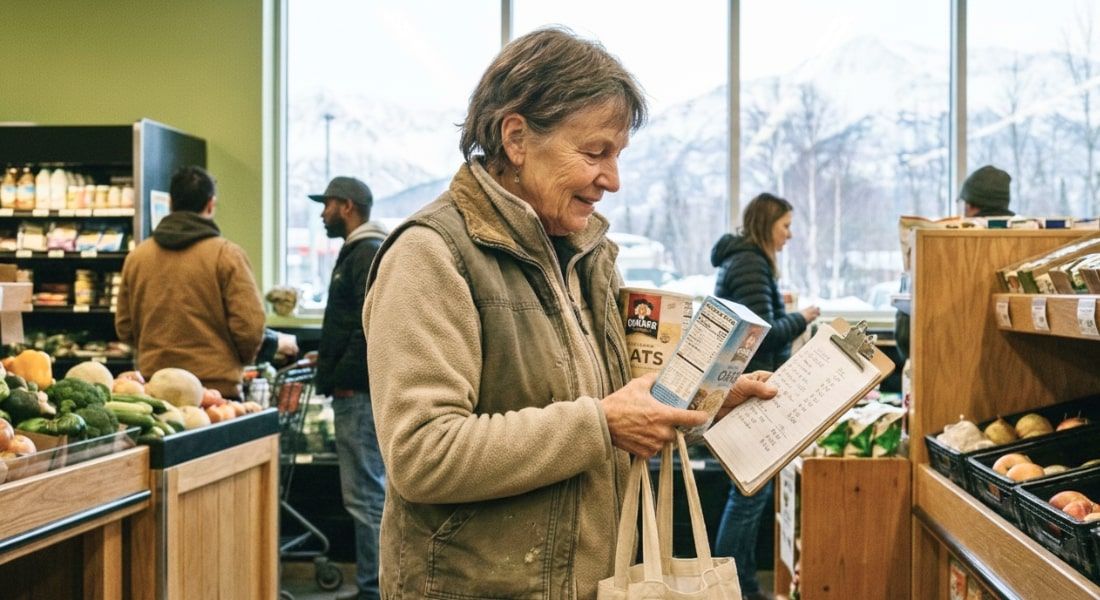
Almost everyone who moves to Alaska remembers their first grocery run. You grab a gallon of milk, a loaf of bread, maybe some fresh produce. By the time you reach the checkout, you’re staring at a total that makes you blink twice.
It’s a shared moment among newcomers. That first trip north of Anchorage or to Palmer’s Fred Meyer teaches more about Alaska than any relocation guide. Groceries in Alaska do, in fact, cost more. Sometimes a lot more. But that’s only half the story.
Why Prices Feel Higher and How Locals Adapt
Alaska’s supply chain stretches farther than most people imagine. Barges and planes bring in most products, and winter storms can delay deliveries for days. Those costs add up long before they reach the checkout counter.
A gallon of milk in Palmer might run $5. In Nome or Bethel, it can reach $9 or $10. Even with local and online competition, fresh produce and perishable goods continue to command a premium.
That’s the reality. But the other reality is how Alaskans adapt.
The Local Counterbalance
While store prices can surprise new arrivals, locals know how to even the scales. The key is in what’s local.
Salmon, halibut, moose, and ducks aren’t weekend luxuries. They’re everyday staples. Many families have freezers full of fish by midsummer and restock again during the fall hunting season.
Beyond that, people rely on homegrown vegetables, farmers’ markets, and community food shares. It all comes together to create a picture of sustainability that helps offset the grocery bill.
If you’re moving to Alaska, learning to source locally isn’t just about saving money. It’s about becoming part of the place’s rhythm.
Live by the Seasons
Alaska teaches you to live by the seasons. You plan around what the land and weather provide.
- Summer: Fish, garden, and stock up on dry goods.
- Fall: Hunt, can, and prep for winter.
- Winter: Live from the pantry and freezer, share with neighbors.
- Spring: Restock, repair, and get ready to do it again.
It’s more than a routine; it’s a lifestyle. Over time, that self-sufficiency becomes one of the most rewarding parts of Alaskan life.
Alaskan Self-Sufficiency in Action
Last fall, a family in Wasilla caught their limit of silvers in the Mat-Su River. They filled their freezer in just one weekend. Over the following months, those fillets became weekly dinners shared with neighbors and friends. This simple catch turned into a way to connect with the community.
That kind of “wealth” isn’t found on a balance sheet. It is the confidence of knowing you can feed your family. You can rely on the rhythms of the seasons, no matter what the grocery shelves hold.
A Different Kind of Wealth
When you stop comparing Alaska to the Lower 48, the numbers start to balance. Gas prices often run lower than in California, and property taxes in many areas are modest.
You might pay more for produce, but you’ll pay less for peace. The area has fewer crowds, less noise, and more space to breathe.
Don’t measure Alaska by what it costs. Measure it by what it gives back. The quiet mornings, fresh air, and self-reliance are worth more than a few extra dollars on milk.
As I often say, “The cost of living is higher, but the value of living is too.”
Planning Your Move with Confidence
If you’re planning a move north, go in with open eyes and a practical plan. Build a grocery budget that reflects local prices. It’s also smart to buy in bulk when possible or source directly from local producers.
Connect early with your community. Alaskans love to share advice and resources with those willing to learn.
Midway through your first year, you’ll realize something simple. The grocery total doesn’t sting as much once you understand where the real value lies.
Alaska Insights: Questions Locals Hear Most
Why are groceries so expensive in Alaska?
Barges and planes ship most products, adding transport and storage costs. Weather delays and distance from manufacturing centers raise prices, especially for perishables like milk and produce.
How do locals save money on food?
Alaskans fish, hunt, garden, and share resources. Many families rely on freezers full of salmon, moose, or halibut, and on stocked pantries of local vegetables. It’s both tradition and smart economics.
Is it realistic for newcomers to live off the land?
Yes, but it takes time. Start small. Learn to fish, visit local markets, or join a community CSA. Over time, your skills and pantry will grow naturally.
What are grocery prices like in Palmer or Wasilla?
They’re generally more moderate than remote villages. Expect to pay $5 for milk, $4 for bread, and $1.50–$2 for an apple, depending on season and store.
Does Amazon or Costco help with prices?
Yes. Many Alaskans use Amazon, Costco, and bulk orders from Anchorage to manage costs. Shipping times can vary by season, but prices on nonperishables are often competitive.
Are property taxes and fuel prices higher, too?
Not necessarily. Many Valley communities have modest property taxes, and fuel prices can be lower than in parts of the Lower 48. Overall, the costs balance out when you look at the bigger picture.
What’s the most significant adjustment for newcomers?
Understanding that abundance looks different here. A stocked freezer and a full woodshed matter more than a weekly grocery haul.
What’s the best mindset to bring north?
Curiosity and patience. Alaska rewards people who adapt, plan, and learn from locals rather than trying to recreate Lower 48 habits.
Start Your Alaskan Journey Today
Alaska’s Valley lifestyle is rewarding, but it comes with its own learning curve. Planning and adapting to local rhythms makes all the difference.
The Valley Market Team brings deep local expertise and practical guidance. We’ll help you find the right home and provide the resources and tips that make life in Palmer and Wasilla easier.
Reach out today for personalized guidance. Let us show you how to make the most of life in Alaska’s Valley.