Most folks try to time the real estate market. They wait for a surge or hold out for a perfect month. But here in the Mat-Su Valley, things move at a quieter pace.
I have lived here my whole life, and the pattern is familiar. The Valley rarely swings. It grows slow and steady, season after season.
In a stable market like ours, overpricing becomes the fastest way to stall a sale before it ever gets moving.
Valley Growth Remains Predictable
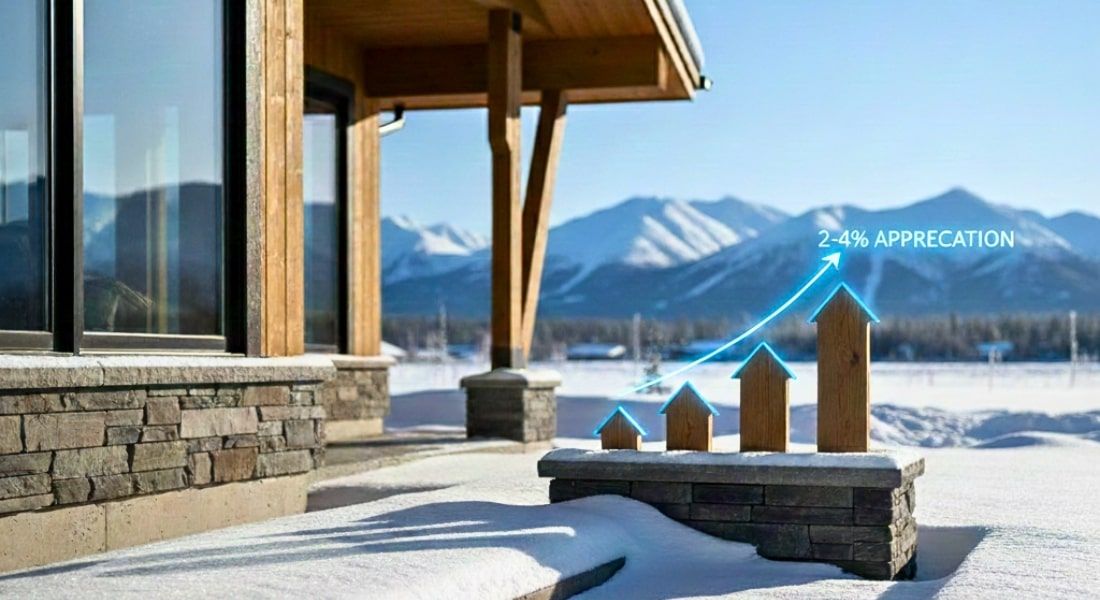
For more than a decade, the Mat-Su Valley has steadily appreciated 2–4% annually. Outside the temporary pandemic spike that affected the entire country, our market has avoided sharp climbs or deep drops.
Inventory stays tight but rarely frantic. Buyer demand holds steady. This stability is good news for folks upgrading, downsizing, or planning a long-term move. Timing matters less here. Pricing matters more.
Overpricing Stands Out In a Stable Market
In a hot market, buyers chase prices. When the market is steady, buyers evaluate them. That is the shift I see every month across Palmer, Wasilla, and Big Lake.
Sellers often anchor their asking price to the home they want next, or a neighbor’s COVID-era sale. Others rely on online estimates that do not reflect local nuances.
Buyers, on the other hand, look at actual recent sales, days on market, inspection results, and price reductions. When the seller’s number and the data do not match, the listing slows within days.
If buyers sense misalignment between price and value, they simply wait. And in this market, they can afford to.
High Price, Growing Doubt
A few winters ago, I worked with a seller in Palmer who listed a clean, well-cared-for home. We priced it slightly high, hoping a relocating buyer would fall for the mountain views.
The first week brought light traffic, and feedback was consistent. Beautiful home, priced too strongly.
Snow fell for days. The driveway glazed over. Buyers drove past without scheduling showings. I watched the days on market climb while the seller insisted the right buyer would eventually arrive.
By week three, the silence grew heavy. That is the emotional side of our steady Valley market. When a home sits without a price adjustment, buyers begin to assume something is wrong, even when nothing is. They think the seller is hiding an issue or bracing for a strict inspection.
Eventually, we corrected the price. Activity jumped within forty-eight hours. Two solid offers followed. The home sold near the number we should have chosen from day one.
Overpricing Costs More Than Ever
Volatile markets allow more wiggle room. Steady markets do not. Here is why overpricing becomes so costly now:
- Buyers have access to better data than ever. They know the comps.
- Appraisals are conservative again, so banks rarely stretch.
- High interest rates make minor price differences feel large. A twenty-thousand-dollar gap can feel like forty thousand in monthly payment terms.
- Inventory is thin but not desperate. Buyers can wait for the right fit.
Price becomes your loudest signal. Get it wrong, and buyers move on.
What Buyers Are Looking For
Across Palmer, Wasilla, and the more expansive Valley, buyers keep asking for the same things. They want clean homes, clear documentation, accurate pricing, honest representation of condition, and reasonable inspection conversations.
They are not chasing deals. Buyers need confidence. A realistic price gives them that confidence faster than any new appliance or fresh paint.
Confidence builds competition. Competition builds stronger offers.
Price with Data, Not Emotion
Here is the pricing framework I offer to every seller:
- Anchor your price to the last three to six relevant sales. Not the dream sale. Not the pandemic sale. The real ones.
- Your condition determines the price. Deferred maintenance weighs heavily in a buyer’s mind.
- Adjust early if showings are quiet. The first ten to fourteen days are a signal.
- Plan for appraisal reality. Stretching your price today only sets up renegotiation later.
- Focus on momentum. A well-priced home creates the energy that attracts the right buyer.
Realistic pricing is not settling. It is a strategy.
Overpricing Costs More Than Timing
Many find this surprising. The Valley’s calm rhythm means timing mistakes are rare, but overpricing errors add up quickly.
I have seen sellers lose more by holding a high number for sixty days than by pricing correctly from the start. Once a listing goes stale, sellers usually cut the price by more than the original gap.
You do not need perfect timing; it’s about having a price that matches the Valley’s real behavior.
What Sellers Want to Know
How long do well-priced homes take to sell in the Valley?
Most well-priced homes attract vigorous activity within the first one to two weeks. While an immediate offer isn’t guaranteed, early interest sets healthy momentum.
Do buyers really judge a home by days on market?
They do. When a listing sits for three to four weeks without any movement, buyers start to assume there’s an issue. Even if the home is clean and trouble-free, the perception can still be a hurdle.
Are online valuations accurate for the Valley?
They can offer a rough starting point. However, they rarely account for local variables like well depth, septic type, outbuildings, winter access, or condition differences. Local pricing from recent sales is far more reliable.
Should I price higher to leave room for negotiation?
That approach often backfires. Buyers in a stable market are not looking for haggling space. They want a number that reflects real data. Padding the price can push them toward another home that feels more transparent.
Does condition outweigh pricing in the Valley?
Both matter, but pricing usually wins. Overpriced, clean homes often stall. A dated home priced correctly still draws attention. Buyers adjust expectations quickly when the price matches what they see.
When should I consider a price adjustment?
If showings are light or feedback is consistent for ten to fourteen days, it is time to respond. Waiting longer risks slipping into the stale listing category, which invites steeper reductions later.
Ready to Price Right in the Valley?
Selling a home in the Mat-Su Valley doesn’t have to be stressful. Understanding the market and setting the right price from the start makes all the difference.
The Valley Market Team has the local expertise and up-to-date data to guide you through every step. We analyze recent sales, buyer trends, and your home’s unique features to attract the right buyers quickly.
Don’t leave your sale to chance. Contact us today to discuss your home, your neighborhood, and the numbers behind a smart price. Let’s make your move a confident one.